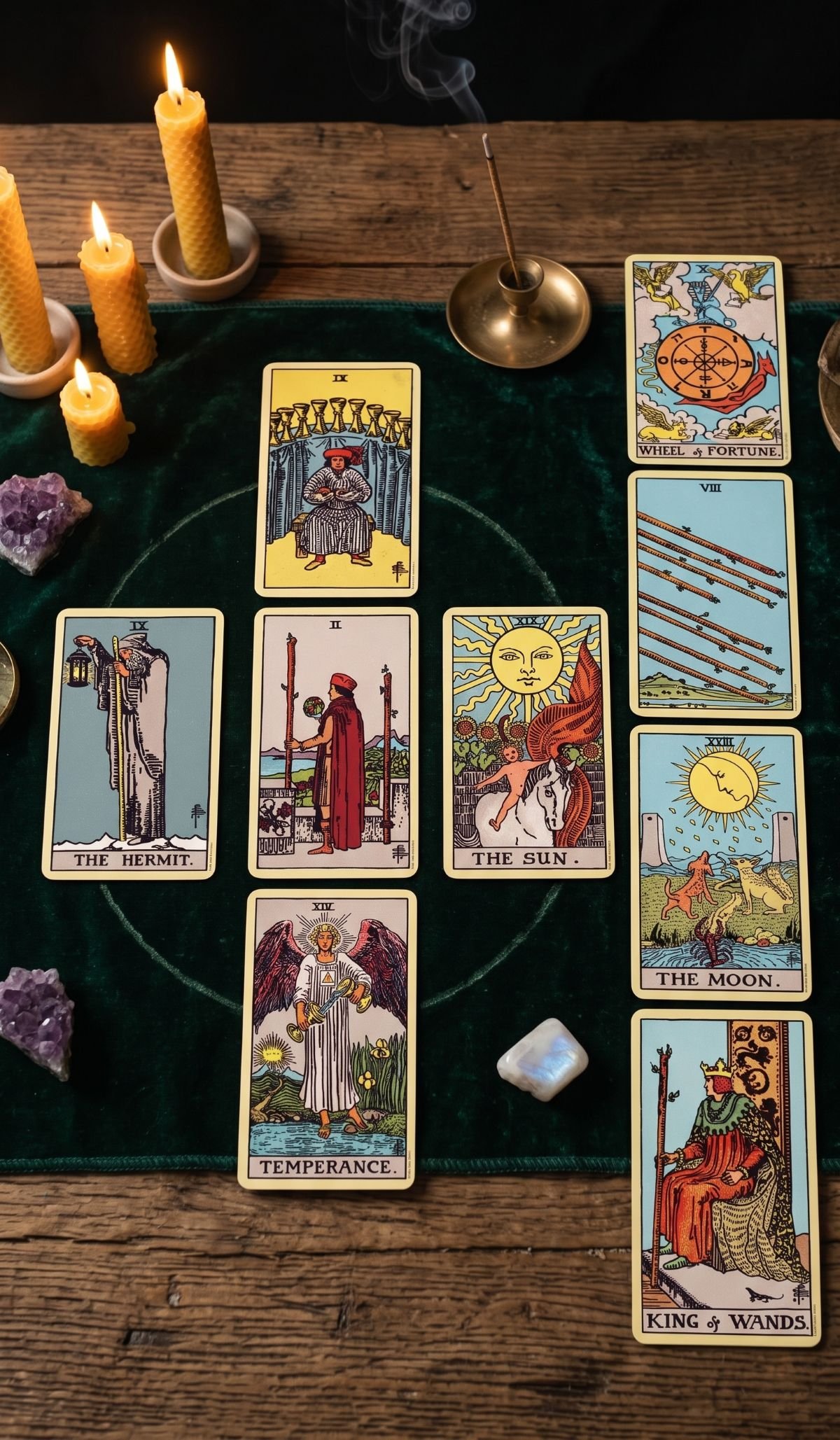
A variety of tarot cards are spread out on a wooden surface next to a lit candle. The cards show intricate illustrations and symbols, including figures and abstract designs, suggesting themes of divination or fortune-telling.

The Celtic Cross is the most widely recognized spread in modern cartomancy. First published in 1910 by occultist Arthur Edward Waite in The Pictorial Key to the Tarot, it transformed tarot from an informal parlor amusement and secretive lodge ritual into a standardized, narrative-driven framework for divination and self-reflection.

A wooden table with several tarot cards laid out, depicting various images and symbols. A person's hands are visible, holding a deck of cards ready for reading. The atmosphere suggests a moment of concentration and mystery.
A set of tarot cards is spread out on a dark, textured surface. Three cards are prominently displayed on top of the deck, featuring vibrant and mystical illustrations. The central card showcases a figure with long red hair, surrounded by symbols and abstract designs. To the right, a card labeled 'The Hermit' depicts an antlered silhouette against a forested backdrop.
A set of tarot cards is laid out on a light surface. The cards feature illustrated designs with rich colors and intricate details. They depict various figures and symbols, including a person steering a ship, an angelic figure with wings, and a figure holding a disc, suggesting roles or personalities.

How to do a Celtic Cross Tarot Reading

A Celtic Cross reading starts by asking an open, thoughtful question about your life. You begin by placing the first card down to represent your current situation, then lay the second card across it. This central pair shows the heart of the matter—where you are right now and the main challenge or obstacle you are dealing with.